Showing posts with label tamil nadu. Show all posts

Friday, 21 September 2012

hotel: ITC GRAND CHOLA, Chennai


Place: CHENNAI 

For over a millennium, the Chola royal power held sway over much of southern India. The grandeur of  their structures holds visitors spellbound even today. So it is not surprising that as ITC Hotels, one of India’s largest hospitality groups makes a push for greater prominence, they make a statement that reverberates with Chola grandeur and royal lineage in Chennai.  

Whether it will it usher in a new era of hoteliering in India, just as another hotel in another coastal city by a bay did more than a hundred years ago, remains to be seen. However this hotel has the scale and and the ambition to be a game changer.  It is however difficult to comprehend ITC’s newest and biggest hotel, the Grand Chola without going into getting into some numbers. 
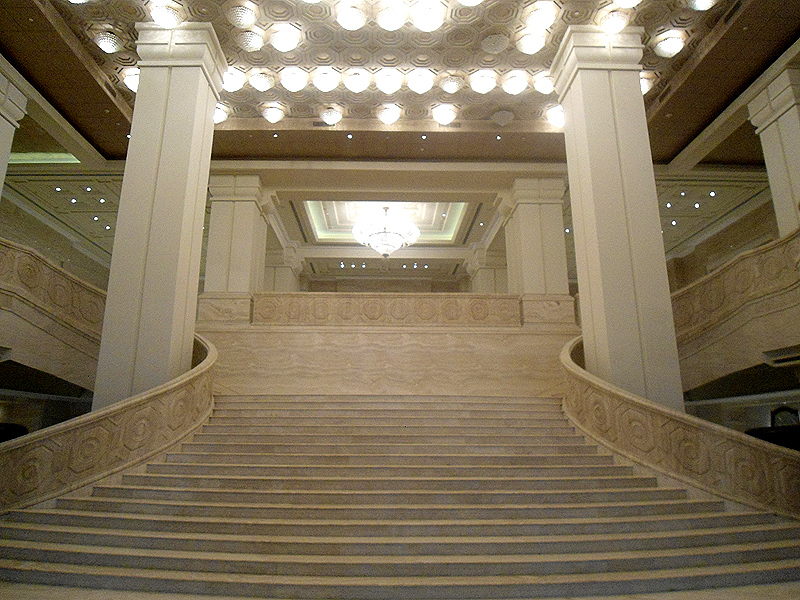
The Sangam staircase is as impressive an entrance as any in India
Built at a cost of Rs 1,200 crore, this 600-room hotel, spread over 1.5 million square feet in an eight acre plot, one of the largest to date in India, promises to change Chennai as a destination by significantly adding MICE (meetings, incentives, conferences, exhibitions) capacities to the city. It has 100,000 square feet of banqueting and convention space which includes 30,000 square feet of pillar-less ballroom, named after one of the greatest Chola rulers, Rajendra. It is another matter that this seemingly unending ballroom, in which one cannot see from end to end due to the slight curve of the building, can be divided into eight individual ballrooms and can accommodate 2,500 people.

Rajendra is the largest banquet hall in the city
This hotel is slated to alter the tourism and convention landscape in the region, ITC group chairman Yogesh Deveshwar had said at the launch of hotel complex in Guindy, which was inaugurated by the Tamil Nadu chief minister J. Jayalalithaa. MICE accounts for about 10-15 per cent of the city’s total hotel demand. Growing that the segment will be a challenge, admitted Deveshwar. 

Nakul Anand, Executive Director and head of the group’s hospitality division said, “The Grand Chola is ITC’s tribute to Tamil Nadu and an iconic asset for Chennai, as an archetype of the culture and ethos of the region. The grandeur and unique attributes of the hotel will provide a fillip to the hospitality sector in Chennai in addition to transforming Chennai into India’s convention capital.” Chennai, more a gateway to south India than a genuine tourism destination itself in the past, in recent years has seen the growth of industrial hubs in its periphery, with significant presence of sectors such as IT, auto, shipping, leather, woodwork, FMCG, etc. 

That it might. The hotel, the ninth in ITC’s Luxury Collection and part of global chain Starwood, reportedly even left the Chief Minister spellbound. After rumoured delays in allocating time for the inauguration, J Jayalalitha spent about the double the allocated time as she toured the expansive property, even though the state government reportedly denied permission for a planned helipad last year. The hotel, which has opened partially, is expected to finally employ over a thousand personnel, while about four times the number have worked for a number of years to realize this dream in concrete and imagination. With four separate entrances, and three wings, with the first housing Executive Club rooms, while the second wing has ITC One rooms, Towers rooms and all the suites and the third wing is for long stay residences.

The Lotus Lounge, an undemarcated area where one cannot hear outside noises, is a modern
application of Chola technology
Design antecedents
Those coming in from the main or West entrance for a meeting or convention could straightaway take a choice of extensive escalators from the pre lobby area, but would impressive the grand staircase in the main lobby, called Sangam, and reminiscent of magnificent palaces of yore. It used Traventine Romano Classico marble, interspersed with symmetrically arranged pillars finished in elegant white stucco, reminiscent of the temples of South India.

Rich detailing and numerous nods to the region's
history make this hotel a delight to explore
The architects, Singapore-based Smallwood Reynolds Steward & Steward LLC, have used Chola architecture as the inspiration for the façade and motifs in the hotel. Once inside, take note of Thanjavur’s Brihadishvara Temple inspired pillars and wall textures. In contrast to the rich mélange of the exterior façade, the walls in the interior are serene, almost sparse, and in neutral tones, lending an added feeling of serenity across this vast hotel. Visual leitmotifs include carved elephants raising their trunks in veneration, the Wheel of Life or Chakra, the four petalled clover floral motif and the intricate fretwork on panels and columns—each chosen for its relevance to Chola themes. And impressively, they have been hand carved by artisans from Mahabalipuram! Among the materials used are stone, granite, marble and wood. Note the impressive backlit onyx marble at the bell desks, though in other parts of the hotel the marble has  been sourced from distant parts of the world, including Italy, Spain, Morocco, Turkey India, China and Pakistan. 

Understated may the language of the hotel interiors, but look out for the individual works of art. A spectacular bronze and copper horse in the lobby is a reminder of Chola valour.  Large urns in deep brown and black grace the entrance to the lobby. These water urns were traditionally used to store water during summer months, and today are meant to symbolise the concept of responsible luxury. Pillar designs are sourced from Gangaikondacholapuram Temple. Door handles are exquisite metal peacocks in pairs. Even the exhaust in The Madras Pavilion is in the shape of a lotus! Water design elements are comparatively scarce, though there are three pools over the western entrance atop the banquets. Innovative features include a 'lotus lounge' an undemarcated area within which you can hear echoes but not a foot outside of it, a modem application of Chola technology.

Food destination
Cafe Mercara's warm interiors
When finished, the hotel will have 10 food and beverage outlets, offering a variety of cuisines, which includes the outlets the group is hoping will later expand to other hotel properties, including a fine dining Italian restaurant Ottimo, whose cooking range alone costs a crore, along with Madras Pavilion, a three meal buffet outlet and Café Mercara Express, a 24-hour signature coffee house. 

A much anticipated restaurant is Royal Vega, which will offer signature vegetarian dishes from across the country. Regular ITC hallmarks such as Peshawri and Pan Asian will also feature. Also on offer is the ambitious single malt and cigar lounge, Cheroot and Tranquebar, a bar for understated luxury, not forgetting 'I' Place - The Fun Pub! The gourmet shop, Nutmeg, with its extensive collection, sold out on the very first day itself.

The hotel will have 23,000 square feet of ITC’s signature Kaya Kalp spa and 21,000 square feet of luxury retail space. It became the world’s largest LEED (Leadership in Energy and Environmental Design) platinum rated hotel.

The digital valet has multiple uses
The hotel abounds in many firsts. It uses cutting edge technology in many aspects, including one-of-its-kind iPad controlled technology that will have all the controls in the room, from lights to AC and even looking at who is at the door without getting up. Of the 600 accommodations, 78 will be serviced apartments, which are yet to open. Just in case it is all too large to comprehend at one go, there is an interactive concierge display system in the lobby that can map out the direction to follow, and transfer the information to your phone!

ITC, which had started its hospitality journey in 1975 from the same city, already has 8,000 rooms in the country, and plans to add another 5,000 odd in the next five years with an investment of about Rs. 25,000 crore in the next five years. The Grand Chola is probably the glittering crown of this extensive empire.

Open to the directions
A view of Madras Pavilion
Vallavan is the north entrance, a drop off point for the Grand Raja Raja Chola Suite
or the Grand Presidential Suite guests and for ITC One. Guests get personalised check-ins here.

Sembiyan, the drop off facing the east, is the dedicated entrance for the high end luxury retail area – the Grand Luxe Street.

Killi, the drop off facing the south, functions as the entrance to the Chola Residences – the high end serviced apartments at ITC Grand Chola.

The grandest entrance, to the west, also serves as the main gate. This entrance is called the Chola drop off and leads to the Grand Stairway in the palatial lobby – Sangam.

The total quantity of marble used in the hotel is 92,000 square metres

The total quantity of external granite cladding is 12,000 square metres

The total external painted area is 15,000 square metres

An inhouse theatre, Kalai Theatre will be on 2,625 square feet with a seating capacity of 45 persons 

Wednesday, 25 April 2012

Not so black and white

Place: PONDICHERRY


One of the most popular destinations of the Coromandel coast, and indeed south India, Pondicherry is a charmed, quaint town, steeped in French culture topped by Sri Aurobindo's aura. A visit indicated all of this to be true, but not reflecting a true picture. It is as much a Tamil Nadu small town, congested and colourful in a way only towns in that area can be. The city actually almost looks away from the Bay of Bengal.

NH32
NH 32 is an excellent way to reach Pondicherry from Chennai
I drove in from Madras, now Chennai, starting around 7 in the morning. The approximately 150 kilometre journey takes a little over two hours, unless you are stuck in a jam, as I was. I made full use of it by sleeping through, and reached in about four hours! The road, NH 32, is excellent though, and very noticeable to north Indian eyes. Small towns with their colourful temple mandapams and crowded markets dot the journey, with green- brown hills and pretty vibrant fields replacing them once you are out of the urban areas. To me, it is surprising that at coastal route is not more popular, but the driver said that road was not as good.

The entry gate to Pondicherry 
Eagerly looking out as I entered the city, as I had heard so much about it, the first moments inside were disappointing. Instead of beautiful French era mansions, on view narrow streets flanked by small street side shops, interspersed by modern glass fronted facades of new hospitals and coaching institutes. :( There is no effort to cash into the reputation of the town, and the disappointment continued till suddenly the very look of the place altered. I was later told Pondicherry, officially Puducherry, is divided into what is now the heritage zone, or White Town and the rest, referred to as Black Town.

White Town 
So today, when people gush about Pondicherry, they refer usually only to the White Town and Auroville, an outpost. The White Town, built by the French who were in charge for about 280 years, fronts one of the four beaches of the territory, is an approximately oval area laid out in a grid pattern within, with buildings and parks.

Explore White Town on foot, and let the camera capture little details
This French quarter has cousins across the world, and does not compare favourably either in the architecture or in its upkeep, even though the tourism office is right by the sea and quite disappointing. Though it is best explored on foot, be ready to be tired as the weather is muggy for the better part of the year. Also many streets are cobbled, great to look at, but not made for long walks. The architectural style is largely French colonial, part Gothic, with some local influences.

The beachfront area, known as Promenade beach, is well used. Early morning sees joggers out in force, even in light rain, while students take up the later morning time by running around and playing. Gandhi's statue is a favourite hangout. Quiet during the afternoons, the day evening belongs to the tourists and towners who may come for the sea breeze or just a walk. There is an old lighthouse, which was visible from the room of the hotel I was staying in, and badly in need of repair.

White Town has a number of beautiful mansions, though many now house Indian officialdom and bureaucracy. A significant part is still private however, and keep a lookout for the Alliance Française, Lycée Française, French Institute, Mairie (Town hall). The area has a number of hotels, many of whom have tried to recreate the past including Hotel D’orient and Duplex. There are a number of museums, including the Pondicherry Museum, the former houses of writers Bharathidasan and Subramania Bharathi, which are today museums and the Jawahar Toy Museum. If you are on a short trip, enjoy the outdoors instead.
The Park Monument, set in the middle of the park, and left, scenes of devastation from the cyclone are still visible
Pondicherry was devastated by a cyclone in December 2011, and signs of the extensive devastation can still be seen around the town. A prominent park, today called Bharati Park, still has uprooted trees, as do a peripheral parts of the town.

A special feature of the town is its rich craft heritage. There are a number of excellent craft labels, and at least one label, Hidesign is now an internationally acclaimed leather accessories brand. But there are many more, and for a craft lover, a visit to the main market in White Town or in Auroville is going to throw time budgeting astray. Look out for Maroma. For the budget conscious, try Auroshikha. Must buys include perfumed candles, kurtas, 'green' bags, soaps, oils and incense sticks. Besides great baked products, especially from Auroville. Quirky shapes, sizes and aromas ensure they make for great gifts. Plan accordingly.

The Matri Mandir is situated in the middle of the Peace area
Especially when visiting Auroville. Arguably the most famous extension of Pondicherry, this is where an alternate future is taking shape. For more on it, look up the net, but for the average visitor, this is paradise for those yearning to get away from the tempo of busy urban lives.

Founded by The Mother, Sri Aurobindo's disciple in 1968, it is an UNESCO endorsed township that is worth a visit, if only to see white skinned people zipping around in bikes, usually attired in calico lungis or kurtas, complete with checks. Its beautiful, un-manicured environs (you get the drift), tucked away houses, lawns and gardens merging into woods, dirt tracks and the occasional road, small markets, the monumental Matri Mandir and the charming food and craft outlets, all make it a a 'different' trip. You have to buy peanut butter from the bakery. Just a word of caution, if you wish to visit Matri Mandir, you will have to get prior permission from the Visitor's Centre, which is quite far away. If you can, spend a day there, and a sense of peace, however ephemeral, is sure to envelop you. It was my last stop at the former French outpost, and a great way to conclude the trip. 

Tuesday, 24 April 2012

Morning at the Marina

Place: Chennai 

Chennai has relatively few popular tourist spots. Ok, Chennaivasis need not kill me, there is still freedom of opinion. What I mean is the majestic Marina Beach is still its chief attraction, notwithstanding its politicians and Sirji.

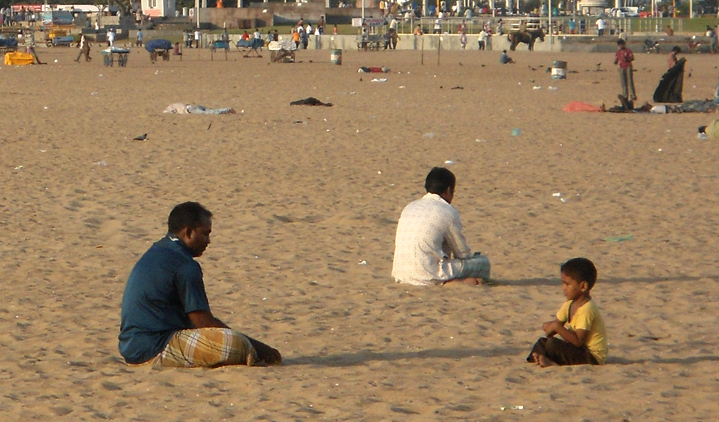
The Marina is indeed impressive. It is huge beach. Wiki says second largest without specifying which is the largest, though I suspect cities such as Miami, Rio and Sydney may be in the race for the top spot. Anyways, the Marina at about 13 kilometres is one long stretch of sand, though the main area is a little over two kilometres long. Given an average width of about 300 metres, you may be forgiven for thinking its a bit too much once you water laden feet sink in the sand as you make your way back to comfort of your car.


The sand is not exactly soft, and it compares unfavourably to Kovalam or indeed Europe. But there is much to see including crabs scuttling into their holes all over the beach. Near the water, the wet sand is heavy and becomes muddy.

It's a very straight coast, but beware, the water is choppy. You wont see too many boats out in the sea frequently, or swimmers. Swimming is illegal in fact. Yes, fatal drowning rates are quite high. Dipping your toes in the Bay of Bengal is a safer bet.

Later in the day, there will lots of street food. Look out for the spice level
It is a well used beach, right from early morning. The health conscious run, jog and jump. Later the vendors arrange their stalls, and serve continuously as business picks up by the evening. Summers are hot in the city, so the afternoons are deserted, but the cool evening breeze draws in many, locals and tourists alike. Many of the vendors sell their wares late into the evening and then retire for the night right on the beach. 

Along the road is a wide pavement, excellent for walking or running. There are a lot of statues, including one to 'Triumph of Labour'. Pick your favourite from Gandhi, Kamaraj, Subramania Bharati, Annie Besant, Periyar, and even Subhas Bose, Vivekananda and Robert Caldwell!

Here are some early morning views:
It is wide, wide beach. Wish it was cleaner


Derelict boats, but actually still in use are parked along the beach


Family time as dad and offspring play on the sand


Beware of the surf. These are off limits waves


A view of the Vivekananda Ilam from the beach


Tracks and shoe prints dot the seafront. Lots of crabs populate the beach


Morning ablutions on the Marina

Thursday, 19 April 2007

Once and future palace

The Fernhills Palace is now part of the Welcomheritage
group of hotels
Place: OOTY

Ooty has been a favourite with holidayers for a long time. The English, to escape the stifling heat and humidity of the plains of south India, found it to be great retreat.

Among the best known destinations in this hill town is the Fernhills Palace. Captain F. Cotton of the Madras Engineers Regiment built the first Fernhill Bungalow as far back as 1844. Over the decades, owners kept changing, till the then maharaja of Mysore, Chamarajendra Wadiyar X, just 12 years old, bought the property in 1873.

Since then, this sprawling estate, built over 50 acres, has been with the erstwhile Mysore royal family. The family has given it out to many hospitality chains to run it, but been satisfied with any, as a result the property has been part of many a hotel group. It is currently part of Welcomheritage's list of hotels, though the Wodeyars remain its owners.

The Palace itself is full of relics of a past era. Past rulers of the dynasty cast their watchful eyes on you as you pass them in halls, rooms and corridors full of memorabilia from eras long gone by. There is a profusion of period pieces - tables, beds, desks, lamps, pianos, dressers, paintings all crowd around almost atop each other as space has run out. I had to actually run out to take breather - on to beautiful, moderately landscaped gardens that retain some of their natural charm. And they are beautiful - just a look at the pine trees, or silver oak or red gum, or cypress trees will reassure you on that point. If you stay at the Palace, or even just happen to visit, you would be well advised to spend more time exploring the sprawling estate.