Showing posts with label cuisine. Show all posts

Monday, 5 August 2013

Near pavilions


The Thai Pavilion is decked in warm, welcoming colours 
Place: GURGAON 

Restaurant: THAI PAVILLION

Thai Pavillion is a welcome addition to Gurgaon’s considerable culinary space

Almost two decades after the first Thai Pavilion opened its doors at Mumbai’s Taj President, it forever altered that city’s appreciation for Thai delicacies. Now its latest edition is set to usher in a similar sweep in shiny-shabby Gurgaon’s swanky Vivanta by Taj, where the latest edition of the Pavilion has just opened. The newest edition of the restaurant, the third, after a Pavilion at Vivanta in Hyderabad’s Begumpet, also marks the first north Indian foray for the outlet.

Kai haw bai toey, marinated chicken morsels wrapped in
pandan leaves and fried
The same high standards still apply, still under eagle eyes of Executive Chef Ananda Solomon, whose success with this brand for long was a model to emulate for specialty restaurants at top end hotels. Well chef is personally in Delhi about once a month, and the team here has trained with him in Mumbai extensively. Additionally, there is a diminutive and dazzling and thankfully English speaking Thai Master Chef Prajaub Shoosridam, spending long hours in the kitchen and frowning at no chillies and other such customization requests. Yes, you are guaranteed an authentic Thai flavour here.

The wonderfully tangy Som tam, Young papaya salad combined
with sweet and spicy sauce
Nevertheless every day there are tests that must be passed successfully. A nod to Delhi’s local client palate means there is a comparatively greater stress on red meats, and well meats in general than the other outlets, but then Hyderabad is spicier. Solomon says a proper study was done of trends in Delhi before finalizing the menu. “You can’t Indianise the concept,” chef stresses. “Thai restaurants have to be authentically handled. The right combinations have to be achieved, right from the starters to the main course. Solomon is known for his adherence to the classic traditions of cuisine, be it his native Konkani or in the successful restaurants he has launched in cuisines as different as Thai and Italian.

The 80-cover Thai Pavilion carries forward the traditions of its cousins – most of the ingredients still fly in from Thailand to Mumbai and then get distributed to Hyderabad and Delhi. While chicken is an exception, almost everything else from lamb to rambutan and dragon fruit to pandan leaves, condiments and even a variety of chillies all fly in twice weekly.

The famous Thai curries - red and green, with steam rice
The menu is fairly extensive, and starters after the lovely pomegranate based welcome drink, include Sakuna chowsuan sos makam (Tempura prawns with tamarind sauce) and Kai haw bai toey (marinated chicken morsels wrapped in pandan leaves and fried), but the best choices by far are the tangy Som tam (Young papaya salad combined with sweet and spicy sauce) and Pra hed (mushrooms delicately blended with Thai herbs). There’s a vast choice of main courses, including many vegetarian ones. Apart from the most familiar, and ordered red and green curries – delicious by the way – try the Heao phad prik haeng (Water chestnuts and cashew nuts with red chili paste) or the Pia Nueng Manao (Steamed John Dory with coriander, chilly, peanut in a tangy sauce).

The restaurant itself is spacious, has a waiting lounge, which in the near future could we well used, given the restaurant’s popularity and fairly affordable pricing. Traditional Thai motifs are present and yet subtle, and the one that can become two PDRs, or private dining rooms offer a greater degree of privacy for groups. While Taj will not say how much it cost – Solomon says finding the right young people who are ready to spend long hours in the kitchen is getting harder – and a challenge for the entire sector.

Try the lovely Tub Tim Grob, Diced water chestnut with coconut milk, a dessert that will leave you
yearning for more
For those not yet favourably inclined to oriental desserts, make an exception and save space for the delectable Tub Tim Grob (Diced water chestnut with coconut milk), which is served in a scooped out raw coconut and comes with ice cream and chocolate rolls, if you like. You will ask for a refill even if you are stuffed! Or return for another helping!  

Monday, 15 July 2013

It’s a sellou(t)


Place: GURGAON 

The warn interiors are evocative of the
 legendary Moroccan city
Restaurant: CASABLANCA

Moroccan cuisine makes a stylish entry to NCR

North Indian men are notorious for being food ‘loyalists’. Fill them with butter chicken or rajma chawal, and you can work out a much better deal. Deny the same, and suddenly lack of cultural connects become an issue, even if you are from just south of the Vindhyas, not to refer to the wider world beyond. For decades since independence, Delhi’s culinary landscape, even top end restaurants in hotels, had to balance global cuisines with more local tastes. It is very recently that increased travel, and possibly more choices as well as a sense of novelty have widened the acceptability levels, and new cuisines are coming up.

Lamb tagine - yes served in its
ubiquitous platter too
A wonderful beginning for Moroccan cuisine has been made by a restaurant called, what else, but Casablanca. Located at one end of Gurgaon at the new Double Tree by Hilton, the restaurant actually has a Moroccan resident chef, Rashid Choukki, who has planned an extensive menu, albeit with the considerable presence of dishes from all across the Mediterranean. The restaurant is also the first by the global hospitality chain to offer Moroccan cuisine, say the staff! Surely they must mean outside Morocco.

A largish restaurant housed in a separate building of its own, it has about 100 covers, including outside seating. The interiors are welcoming, the décor motifs and hues suitably evocative of the legendary Moroccan town it is named after, complete with lamps - from huge brass ones to lit ones in brightly coloured glass, beautiful ceramic tagines, heavy drapes overlooking a verdant treescape and sofas that invite you sink into their comfortable depths. Add a welcoming drink of Moroccan mint tea, and for a moment one could forget the concrete town outside. There are little cabanas that make for a more private seating, and they are weather proofed, providing heat and coolness as required.

Chicken pastillas - succulent and right spiced!
A beautiful menu invites you to start the proceedings. A novelty is a bowl of delicious almond filled dates, accompanied by small cups of orange blossom flavoured milk. It’s complimentary, and may be a bit of an acquired taste for some. This is followed by stuffed breads accompanied by a hallmark of the cuisine – its varied and delicious dips, including the famous harissa but also the hummus, babaghanoush and zaalouk. 


Prawns pil pil. Again, delectable
All excellent, and you could be forgiven for finishing a meal with these alone. A popular menu choice is the pastilla, a traditional slow cooked meat dish combining sweet and neutral or savoury flavours of onions, herbs and spices, chilled overnight. After adding eggs and toasted almonds, it is covered by layers of phylo pastry and finally topped with powdered sugar and cinnamon.  

While Moroccan cuisine uses a lot of spices, the combination with food is very different from the way it happens in India, and like the rest of the Arabic world, sweet and savoury is a common combination. 


Vegetable cous cous: An excellent veg option
Cold salads, usually differing combinations of onions, tomatoes, peppers, eggplants, garlic, greens and seasoning are followed by a tagine, a rich, slow cooked stew, both of meats and vegetables, often combined, that comes in its own pot. On offer are the more usual lamb or chicken tagine, but also more exotic seafood or even quail, rabbit or veal tagines! 

Two veggie options are listed too. The outlet actually offers main dishes after this, but be warned, normal appetites are only going to manage a tagine or a main such as moussaka, an eggplant based dish that is simply too good to be ignored. The adventurous may opt for khlea, dried lamb or beef, samak makli, assorted fried fish, though there are lovely grills as well.

You wouldn’t really have space for desserts if you tucked in earlier, but probably just as well. The traditional Moroccan desserts are fruits, though a variety of sweets, including traditional options such as sellou, but a brisk walk would probably serve you best! Take time out when you go, and let Casablanca weave its considerable magic.

Friday, 3 May 2013

Fine dining, south Indian style


Place: CHENNAI


The interiors of the renovated Southern Spice
Restaurant: 
SOUTHERN SPICE 

It's a landmark almost as legendary as the hotel itself. So when Southern Spice at Chennai's Taj Coromandel had closed for renovation last year, it had led to a bit of a collective mourning for its regulars. 

Arguably one of the best known addresses of cuisine from the south of India, and the Taj group is fortunate in having another one in Karavalli in Bengaluru, Southern Spice has for long been a huge statement for the suitability of these cuisines qualifying for fine dining. Those familiar with its previous version have been a little bemused of a more ostentatious yet understated interiors of its new version. Now one of India’s best-known South Indian fine dining restaurants is back with an entirely new look. 


The vegetarian thali is sure to satisfy even the most demanding
Southern Spice was renovated with interior designing by Ed Poole of Singapore-based Poole Associates. All the four major states are represented both in the design and cuisine, explains general manager N Prakash about the multi crore project that is stunning all comers. Instead of the previous green chairs and the verdant look, the new look is more international. From granite bases with silver grey leafed pillars inspired from medieval temples, wall panels from different parts of the region, wall panels and floor rugs with traditional kolam patterns, design elements from across south India come together in harmony.  Specially composed classical notes waft through the restaurant. 


Kayir katti kola urundai, or
Chettinad fried meaballs 
None of this matters once you reach the table. Laid out are banana leaf shaped gold plated plates. Some servings actually come in gold serviettes. The rest matchup in design brilliance. The cuisine are a nod to sumptuous cuisines of the region, and Executive Chef Alok Anand has delved deep into the region’s culinary traditions to produce a selection  of some of the best of local vibrant flavours. "We did extensive research and travel to come up with our selection," he says. Just about a quarter of the previous dishes have been retained. 

Both the ingredients used and presentation have far more global connections. The kari varuval is made from New Zealand lamb chops! Signature dishes include Kayar Katti Yerachi Kola Urnudai, Fennel flavoured crisp lamb meat dumplings wrapped with banana fibre - a speciality from Thanjavur,  Koonu Ulli Theeyal, Button mushrooms and pearl onions in a roasted coconut curry,  Asparagus Paruppu Usili-Asparagus and steamed lentils tempered with Madras chillies and a definite must try - Chocolate Purnam Mousse-Chocolate mousse filled with coconut, lentil and jaggery mix! 


Denji Rawa Fry, a must try! 
A particular highlight are the thalis - which for many are turning out to be a once in a lifetime experience. There are quite a few thali offerings, but one that requires the gourmand to  come most prepared to appreciate the riches is the Maha Virundhu menu, at Rs 5,000 per head, traditionally the grand festive lunch served for celebratory events.  This one has 30 dishes, from tiny idlis to lettuce lentil salad through delectable rasams that have to be repeated, delectable dosas, amazing podi, soft shell crab dusted with semolina,  kola urundai, till it is impossible to look at food any more. But the Indian Chocolate Mousse, with lentils, coconut and jaggery is something one has to try, insist staff. And the persuasion is deserved, for it is a perfect fusion and melts as you connect with it. Just a suggestion, get the tips, at least till you are a regular. This gastronomic destination will beckon to you, wherever you are. 

It has been a surprise that the hospitality major, which has chosen to replicate some of its other restaurants, such as Masala Art or Thai Pavilion, has not opened more branches of Southern Spice, voted among the top 100 restaurants in the world. Till they do so, come to Chennai to experience just what a Rs 12,000 thali of 30 courses and paired with wines feels like. I did not dare ask! 

Friday, 21 September 2012

hotel: ITC GRAND CHOLA, Chennai


Place: CHENNAI 

For over a millennium, the Chola royal power held sway over much of southern India. The grandeur of  their structures holds visitors spellbound even today. So it is not surprising that as ITC Hotels, one of India’s largest hospitality groups makes a push for greater prominence, they make a statement that reverberates with Chola grandeur and royal lineage in Chennai.  

Whether it will it usher in a new era of hoteliering in India, just as another hotel in another coastal city by a bay did more than a hundred years ago, remains to be seen. However this hotel has the scale and and the ambition to be a game changer.  It is however difficult to comprehend ITC’s newest and biggest hotel, the Grand Chola without going into getting into some numbers. 

The Sangam staircase is as impressive an entrance as any in India
Built at a cost of Rs 1,200 crore, this 600-room hotel, spread over 1.5 million square feet in an eight acre plot, one of the largest to date in India, promises to change Chennai as a destination by significantly adding MICE (meetings, incentives, conferences, exhibitions) capacities to the city. It has 100,000 square feet of banqueting and convention space which includes 30,000 square feet of pillar-less ballroom, named after one of the greatest Chola rulers, Rajendra. It is another matter that this seemingly unending ballroom, in which one cannot see from end to end due to the slight curve of the building, can be divided into eight individual ballrooms and can accommodate 2,500 people.

Rajendra is the largest banquet hall in the city
This hotel is slated to alter the tourism and convention landscape in the region, ITC group chairman Yogesh Deveshwar had said at the launch of hotel complex in Guindy, which was inaugurated by the Tamil Nadu chief minister J. Jayalalithaa. MICE accounts for about 10-15 per cent of the city’s total hotel demand. Growing that the segment will be a challenge, admitted Deveshwar. 

Nakul Anand, Executive Director and head of the group’s hospitality division said, “The Grand Chola is ITC’s tribute to Tamil Nadu and an iconic asset for Chennai, as an archetype of the culture and ethos of the region. The grandeur and unique attributes of the hotel will provide a fillip to the hospitality sector in Chennai in addition to transforming Chennai into India’s convention capital.” Chennai, more a gateway to south India than a genuine tourism destination itself in the past, in recent years has seen the growth of industrial hubs in its periphery, with significant presence of sectors such as IT, auto, shipping, leather, woodwork, FMCG, etc. 

That it might. The hotel, the ninth in ITC’s Luxury Collection and part of global chain Starwood, reportedly even left the Chief Minister spellbound. After rumoured delays in allocating time for the inauguration, J Jayalalitha spent about the double the allocated time as she toured the expansive property, even though the state government reportedly denied permission for a planned helipad last year. The hotel, which has opened partially, is expected to finally employ over a thousand personnel, while about four times the number have worked for a number of years to realize this dream in concrete and imagination. With four separate entrances, and three wings, with the first housing Executive Club rooms, while the second wing has ITC One rooms, Towers rooms and all the suites and the third wing is for long stay residences.

The Lotus Lounge, an undemarcated area where one cannot hear outside noises, is a modern
application of Chola technology
Design antecedents
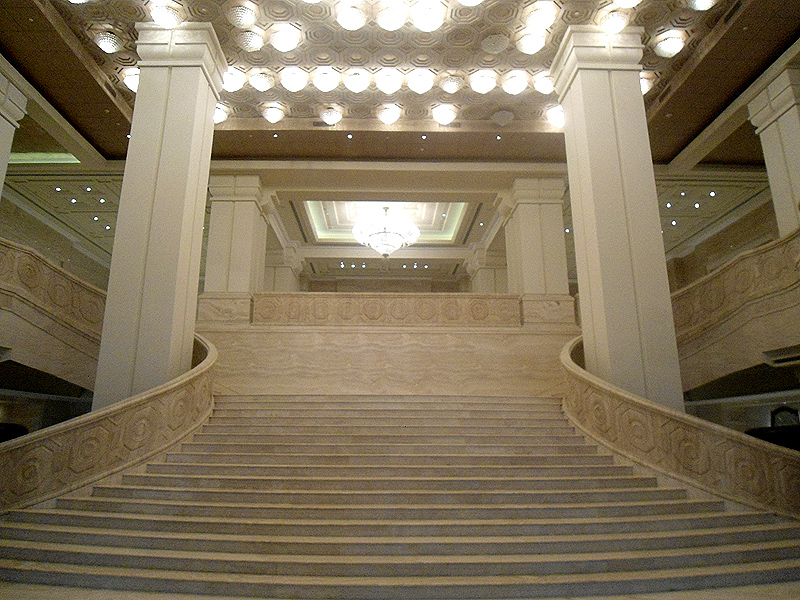
Those coming in from the main or West entrance for a meeting or convention could straightaway take a choice of extensive escalators from the pre lobby area, but would impressive the grand staircase in the main lobby, called Sangam, and reminiscent of magnificent palaces of yore. It used Traventine Romano Classico marble, interspersed with symmetrically arranged pillars finished in elegant white stucco, reminiscent of the temples of South India.

Rich detailing and numerous nods to the region's
history make this hotel a delight to explore
The architects, Singapore-based Smallwood Reynolds Steward & Steward LLC, have used Chola architecture as the inspiration for the façade and motifs in the hotel. Once inside, take note of Thanjavur’s Brihadishvara Temple inspired pillars and wall textures. In contrast to the rich mélange of the exterior façade, the walls in the interior are serene, almost sparse, and in neutral tones, lending an added feeling of serenity across this vast hotel. Visual leitmotifs include carved elephants raising their trunks in veneration, the Wheel of Life or Chakra, the four petalled clover floral motif and the intricate fretwork on panels and columns—each chosen for its relevance to Chola themes. And impressively, they have been hand carved by artisans from Mahabalipuram! Among the materials used are stone, granite, marble and wood. Note the impressive backlit onyx marble at the bell desks, though in other parts of the hotel the marble has  been sourced from distant parts of the world, including Italy, Spain, Morocco, Turkey India, China and Pakistan. 

Understated may the language of the hotel interiors, but look out for the individual works of art. A spectacular bronze and copper horse in the lobby is a reminder of Chola valour.  Large urns in deep brown and black grace the entrance to the lobby. These water urns were traditionally used to store water during summer months, and today are meant to symbolise the concept of responsible luxury. Pillar designs are sourced from Gangaikondacholapuram Temple. Door handles are exquisite metal peacocks in pairs. Even the exhaust in The Madras Pavilion is in the shape of a lotus! Water design elements are comparatively scarce, though there are three pools over the western entrance atop the banquets. Innovative features include a 'lotus lounge' an undemarcated area within which you can hear echoes but not a foot outside of it, a modem application of Chola technology.

Food destination
Cafe Mercara's warm interiors
When finished, the hotel will have 10 food and beverage outlets, offering a variety of cuisines, which includes the outlets the group is hoping will later expand to other hotel properties, including a fine dining Italian restaurant Ottimo, whose cooking range alone costs a crore, along with Madras Pavilion, a three meal buffet outlet and Café Mercara Express, a 24-hour signature coffee house. 

A much anticipated restaurant is Royal Vega, which will offer signature vegetarian dishes from across the country. Regular ITC hallmarks such as Peshawri and Pan Asian will also feature. Also on offer is the ambitious single malt and cigar lounge, Cheroot and Tranquebar, a bar for understated luxury, not forgetting 'I' Place - The Fun Pub! The gourmet shop, Nutmeg, with its extensive collection, sold out on the very first day itself.

The hotel will have 23,000 square feet of ITC’s signature Kaya Kalp spa and 21,000 square feet of luxury retail space. It became the world’s largest LEED (Leadership in Energy and Environmental Design) platinum rated hotel.

The digital valet has multiple uses
The hotel abounds in many firsts. It uses cutting edge technology in many aspects, including one-of-its-kind iPad controlled technology that will have all the controls in the room, from lights to AC and even looking at who is at the door without getting up. Of the 600 accommodations, 78 will be serviced apartments, which are yet to open. Just in case it is all too large to comprehend at one go, there is an interactive concierge display system in the lobby that can map out the direction to follow, and transfer the information to your phone!

ITC, which had started its hospitality journey in 1975 from the same city, already has 8,000 rooms in the country, and plans to add another 5,000 odd in the next five years with an investment of about Rs. 25,000 crore in the next five years. The Grand Chola is probably the glittering crown of this extensive empire.

Open to the directions
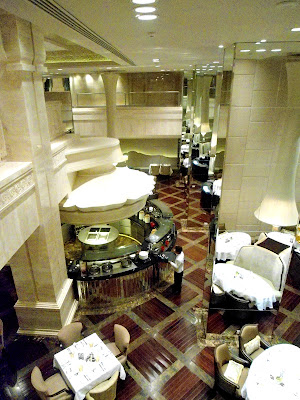
A view of Madras Pavilion
Vallavan is the north entrance, a drop off point for the Grand Raja Raja Chola Suite
or the Grand Presidential Suite guests and for ITC One. Guests get personalised check-ins here.

Sembiyan, the drop off facing the east, is the dedicated entrance for the high end luxury retail area – the Grand Luxe Street.

Killi, the drop off facing the south, functions as the entrance to the Chola Residences – the high end serviced apartments at ITC Grand Chola.

The grandest entrance, to the west, also serves as the main gate. This entrance is called the Chola drop off and leads to the Grand Stairway in the palatial lobby – Sangam.

The total quantity of marble used in the hotel is 92,000 square metres

The total quantity of external granite cladding is 12,000 square metres

The total external painted area is 15,000 square metres

An inhouse theatre, Kalai Theatre will be on 2,625 square feet with a seating capacity of 45 persons 

Friday, 6 May 2011

Anatomy of a meal

Place: JORDAN

Jordan's cuisine is to live for...

An unexpected bounty while travelling is usually the food. Each new places offers its own delights, and insights into a place. Jordan to date remains the destination I most vividly remember for every meal being such a absolute delight. Obviously Mediterrranean in its contours, the cuisine is extremely close to what most would know as Lebanese cuisine.

Here is a glimpse into the first meal we had, which is after a delightful few hours spent marvelling at Jerash. It was a late lunch, it had rained lightly and a light drizzle still continued. The weather was perfect for an outdoors meal, but we did the next best thing, sat next to a huge glass window.  

The idea of taking a pic came rather late in the meal,
when we had satiated ourselves! 
By far the most common and best way of eating is the communal mezze, which is what we followed. It consists of various individual dishes. It starts with a drink, which our case was a most refreshing lime mint juice. 

The food to arrive were platters of hummus and the falafel, great favourites. The salads include the tabouleh and the fattoush. There is also the familiar bagdonsyyeh, parsley blended with tahini and lemon juice. There are more dips on way - moutabal, pureed eggplant, a cousin of the babaganoush,  and in their variety of flavours are a hit at the table. There are bowls of olives and pickled veggies - carrot, radish, cucumber and a local veggie we couldn't identify. There is olive of course to add the to anything. There were wonderful breads to accompany all these, along with the familiar pita came the less known  ka'ak, round, thick and soft - think sheermal without the sweetness. perfect accompaniment for the rest of the meal. 

The centre piece is a very large kabab platter, which also had a bed of biryani type rice. We had stuffed ourselves, already as we had to idea that was coming! But proudly we can say we followed the eco friendly adage of not wasting anything. Coffee followed, and we did not decline! Amazingly, the meal was light enough for us to do more walking around. 

Tuesday, 26 October 2010

Bali on a platter


Early morning by the beach at Nusa Dua

Place: BALI

Look out for the seafood. Smell the durian (you can’t miss it even if you try, as discovered later). Don’t miss the suckling pig (well, I for one had full intentions of doing exactly that). But of course, going to the land of the satays and nasi gorengs meant a lot of wishers were going to have vicarious advice. Well before the itinerary for the trip to Bali had been finalised, food was already high on the priority list.

For an Indian, a trip to Bali has an added attraction — spotting the Indian connection. Bali is full of temples of Wisnu (yes, that’s how Vishnu is spelt there) and tales of Ramayana. There’s Gayatri mantra as caller tunes. Delve deeper and you realise that just the names have remained — Hinduism here has taken forms that few from the subcontinent will recognise. Including its food.

A little deviation to the land that provides the food. Not to forget the sea, which contribute as much. Think of a large seaside mountainous natural park of lush tropical beauty and an entertainment resort put together. Add miles of colourful shops, and ubiquitous tourists. Sprinkle with raindrops and generally perfect weather. You conjured up Bali, ‘island of the gods’.

People of all shapes and sizes, from all corners of the world, look far more relaxed than they do at home. Straw hats waving, they are at the golden beaches and on idyllic cruises, climbing for views of rice terraces and hopefully active volcanoes, sipping Balinese coffee amidst frenzied shopping in bargain and luxury markets, even canyoning, parasailing, mangrove trekking… And like me, cooking! Yes, many tourists do that as well, given the extent of fresh raw food, all waiting for the cooked!!

We stayed at The Laguna Resort and Spa, part of what is probably the Vegas of Bali — Nusa Dua, a peninsula nestled in the south- east corner of the island. It is paradisical in its structured beauty of the multi-million dollar resorts, though not exactly authentic Bali as it was created on UN recommendation in the 1970s, to concentrate tourism in an area. We hadn’t reached in the best of tempers — our flight from India was delayed by three hours, had dinner shoved at us at 5 am-IST and body clock time, ran from arrival to departure at Bangkok’s swanky Suvarnabhumi Airport (the changeover destination, there are no direct flights to Bali from India yet) and our baggage failed to join us!. After some vigorous pidgin English-Bahasa explanations and gesticulating — it was agreed that we would let the baggage arrive before further negotiation.

Vegetable vendors at Bandung market in Denpasar, Bali
Shop to cook 
Well, the next morning, baggage retrieved in a late night sojourn to the airport, under the able guidance of Executive Chef, I Made Putra, we sallied forth to cook. Only to discover we had to buy the ingredients as everything had to be fresh, and we had to buy it.

Off we went to the Badung market, in capital Denpasar. We emerged an hour later — laden with vegetables and spices — some familiar, others exotic — including cassava, candle nuts — again, beware of the smell, galangal roots, shrimp paste and a lot of advice from the shopkeepers and other buyers… The seafood market could be smelt a considerable distance away — fish of many hues overshadowed by crustaceans, squids, octopuses, crabs, shrimps, lobsters, and many other unidentified creatures, some still alive. Seeing the Balinese go about their regular life, in which religion and culture are intertwined was worth wading through the slime!

Back to 5-star environs, washed, we set about putting things in order, right by the seaside! Like most of the region, the accent is on freshness, though perhaps Balinese cuisine uses more spices than all of the rest of south -east Asia. Not just is the use of galangal and lemon grass distinctive, combinations of cinnamon, coriander, shallons, kaffir lime, nutmeg, cardamom and turmeric flavour the recipes too. Most vegetables and fruits are tropical sized, ie huge, creating a novelty factor right from the time you see them. While regular food is rice with vegetables and seafood, festive fare is, well, indeed festive and elaborate. Warung, or local food stalls are everywhere, and despite apprehensions of hygiene, are usually fresh as there is no local provision or concept of storing food!

The condiments are ready to get into the fire
We started with sate lilit ikan, or Balinese minced fish satay with sweet soya and chili. In the name of cooking, all ingredients (see box, and pictures) were mixed together and grilled. Quick, healthy and scrumptious. After applauding ourselves, we moved to the ikan bumbu kare, stewed butter fish curry with steamed rice and vegetables. Just a little more elaborate, this involved creating a basic paste called bumbu wangen — a combination of about 10 ingredients grounded with a lot of fresh ingredients. We cut the beautiful bass we had just bought, in cubes. Cooking time was minimal, and again the result was lip smacking.

The dessert, called kolak, simmered fruits in palm sugar liquid, was less to our taste. Exhausted by our efforts, we voted to let others do the cooking for the rest of the trip. The cuisine justified its reputation, and though MacD beckoned with its huge “welcome home” billboards, we stuck to gado gado, steamed vegetables, all pale coloured usually, lawar, a sauce of minced vegetables, meats and spices, sambal, hot chilli paste, sometimes with shrimp on it and a lot of seafood, some of which took getting used to.

There are a lot for vegetarians in Bali, and for those so inclined, try exotic stuff such as nangka, young jackfruit or pakis, fern tips. Fruits abound, including finger bananas, mangosteens and durians. While you can ask your food to be tidak pedas, or not spicy, if you are the average spice-loving Indian, go for the real thing. You won’t regret it.

Tuesday, 16 March 2010

Tart time

Place: MACAU

Most of those who make a list for their trip to Macau put just one thing to eat - egg tart. Macanese cuisine is a mix of local and European influences, especially of former imperial power, Portugal. The egg tart, a derivative of the Portuguese pastel de nata, has nevertheless become famous as a delicacy from the orient, especially Macau, Hongkong etc.

The egg tart, basically a roundish pastry shell filled by egg custard and baked, comes in different varieties. 

In Macau, they are available almost everywhere, even in supermarkets. Favourites for the egg tart are Margaret's Cafe, tucked away in the bylanes of old Macau, and Lord Stow's Bakery, situated in the southern island of Coloanne. The owners of the incidentally are former spouses, and the taste is slightly different, though there is little agreement on which is better. Try both to decide.