Showing posts with label history. Show all posts

Monday, 30 December 2013

PHOTOESSAY: Kolkata's water worlds

Place: KOLKATA

I was fortunate to recently have been part of a cruise up the river Hugli - from the historic Outram Ghat to Dakshineshwar. It was organised by Gateway Hotel, a new Taj property in the city.

Kolkata, largely built under British rule, was, as every city before the advent of motorised transport, a river facing city. Today, people have turned their backs on the river, but closer examination reveals signs of a time the city still faced the river - its lifeline. An occasional ruined palace facade, the Howrah station, the numerous manors, the numerous ferries and of course the omnipresent ghats, all indicate how the river was once the main road.

What was perhaps even more fortuitous was a visit to the other end of the city - to its wetlands. The wetlands have acted as a natural sponge and sewage cleanser ever since the city has been built. Signs of its existence are seen in ponds increasingly towards the eastern boundaries of the city, though today the EM Bypass effectively acts as a dam. These wetlands, protected under the Ramsar Convention after a long battle, are still not out of the woods. Today mainly used for local fishing, they deserve recognition also for their sheer resplendent beauty, as we discovered in a brief dawn trip.

Here are a few glimpses from the trip: (Click for larger views)
The historic Outram Ghat - once a crucial gateway to the city. There is still a dilapitated customs office here. 


First glimpse of the Hugli


That's our cruiser - though to reach it, we had to take another boat


The river is not as densely packed with traffic as of yore, but remnants of the past remain in fisherfolk plying their traditional trade


First views of the Vidyasagar Setu - the new bridge in Kolkata 


Gateway arranged a wonderful spread of the city's iconic street food on board, only hygenic. From jhalmuri to ghugni to sandesh and kochuri via da,b  there was much to be greedy about! 


Howrah Station, Howrah Bridge, Howrah crowds, Howrah traffic, though Kolkata contributes its bit too! 


The jetties on this river are flexible due to the tide, remarkable engineering


There are many formerly splendid homes and other structures in ruins that if restored, can make the cruise sightings far more attractive 


The incomparable Howrah Bridge, a symbol the city has been identified with ever since it was built in 1943 


Life-sized statues adorn a ruined river facing old city palace


Belur, Swami Vivekananda's creation, and today centre of the Ramakrishna Mission, viewed from the Hugli


The spectacular now twinned bridges at Bally. The older one is at the back, and was once the main connector between south Bengal and rest of India 
Fisherfolk gaze curiously at us!
Dakshineshswar Temple, today associated with Rani Rashmoni


A busy ghat at mid day. Ghats are largely ablutionary, though some are cremation ghats as well


By this time, we had already been hogging almost constantly. There was a serious amount of street food on offer. Even if it meant that we were not supposed to have all of it at one go, we outsiders were not letting this chance go. Most of us already had done a round of breakfast in the hotel, but that did not prevent us from indulging greedily at intervals. As the sun continued its journey upwards above us, most had already stopped paying attention, undeservedly, to out excellent guide, Nilima, an architect working to conserve some of the city's historic past. But the jhalmuri, rolls, puchkas etc were excellent - those we vouch for!!!

Ruins in the middle of the Hugli! Apparently too expensive to remove, but surely can be turned around to be an attraction instead? 


Last glimpse of both bridges and the river skyline


Once Kolkata's main mall, New Market retains its significance and pulls Kolkatans even today


Inside New Market - unchanged for decades, though marginally cleaner, it seemed
Who's your favourite - Kareena, Sonakshi, Deepika, or Bidya? Suit your style


The famous flower sellers of New Market - not much has changed, actually
Inside Flury's - a Kolkata landmark


A Bangladeshi flavoured dinner as we discuss the day, and plan the next
First views of the wetlands a relatively vast area of waterways - shallow ponds, rivulets and canals

Flury's, Kolkata's most famous tearoom and Swiss confectionery, is  must visit for  first time visitor to Kolkata. It has been a landmark since it opened in 1927. After years of a solitary presence on Park Street, it now has 13 outlets in Kolkata, with plans to expand in the rest of the country.


Those little houses are for people to guard the fish at night
Effortless and graceful bridge navigation - in sharp contrast to our efforts, which consisted of much handholding, reassurances, a few jibes, much shrillness and slow progress


Fresh catch of fish for the market
Beautiful ponds dot the wetlands... 


It was difficult to come away from a place where the sun
graces the water so perfectly


In the race for development, green concerns are obviously an afterthought. Numerous examples around the world - eg Aral Sea have shown how devastating the end of a water body can be. Hope all the authorities concerned realise just how precious and beautiful these wetlands are - and keep them as they are. The East Kolkata Wetlands host the largest sewage fed aquaculture in the world. Bonani Kakkad forcefully drilled into us the need to preserve them, and this is actually something the state government should adopt as a showcase to highlight the city's green credentials. The city has no primary sewage disposal unit as it is done naturally, saving enormous resources. That was truly an enriching trip - one only wished there was more time. It was lovely of Gateway to have chosen these activities, and I for one am truly grateful.

Wednesday, 5 June 2013

Travels by aquatint


Place: COLONIAL INDIA

Book:
DANIELLS' INDIA: Views from the eighteenth century
Introduction: B N Goswamy
Niyogi Books
Pages: 204 
Price: Rs 6,000

Professor Mushirul Hasan’s tenure at the National Archives ended recently with the release of particularly significant work – the publication of a book consisting reproductions of exquisite aquatints by the famous English uncle-nephew duo Thomas and William Daniell.  These are part of the collection at National Archives, and present an unparalleled view of late 18th century India- a time of fervent and major changes in directions for India’s polity and economy.


The Water-fall at Puppanassum in the Tinnevelly District  
Not that this is overtly visible in their tranquil depictions of India. When they came to India, after seeking and getting permission of the ‘Honourable Court of the Directors of the East India Company’, Thomas was 36, his nephew William barely16.  They set sail to India in 1785, reaching Calcutta next year. The British Raj had firmly established itself, with the East Indian Company armies winning victories over rulers in Bengal, the south, the Marathas and the Mughals and finally Tipu Sultan’s Mysore.  


The Writers’ Buildings, so called from being the residence of the junior
part of the Gentlemen in the service of the English East India Company.
 Immediately beyond this Edifice is the old Court House; the road leads
on to the Loll Bazar; the obelisk was erected by Governor Holwell,*
 in commemoration of the dreadful circumstance which
happened in the prison called the Blackhole in the year 1756.
Thomas Daniell, as was the custom, on reaching India, advertised in the Calcutta Chronicle that “he proposed to publish twelve views of Calcutta at twelve gold Mohurs the set... there was demand for this kind of work, for the British, potential subscribers, loved the city which had grown to be ‘not only the handsomest town in Asia but one of the finest in the world’”.  Considerable success later, the duo were drawn to go into the hinterlands – up the Ganga, to Murshidabad – the original home of Company Paintings, and then onwards to the leading cities of the time - Patna, Kanpur, Agra  and Delhi, returning to Calcutta only in 1791. Over eight years, they made three major journeys – after travelling up the Ganga, they went south, basing themselves in Madras and traversing the southern parts of peninsular India. The last journey took them to the west, covering Elephanta, Kanheri and Salsette among others.  


THE ENTRANCE TO THE MAUSOLEUMS IN SULTAUN KHUSERO’S GARDEN, NEAR ALAHABAD: This gate is the principal entrance to the garden in which Sultaun Khusero, his mother the Ranee, and his brother Sultaun Purveiz, are interred. Though a massy structure, it has by no means a heavy effect; and though it formerly may have appeared with more splendor, having been painted with different colours, that surface is fortunately now nearly washed off. The upper part towards the garden is much decayed.  
THE JUMMAH MUSJED, AT DELHI: The Jummah Musjed, or Friday’s Mosque,
 is the principal place of religious worship of the followers of the
Mahommedan doctrine in India. This edifice was built by the Emperor
Shah Jehan. The domes, and all the other parts which appear white,
are of Cashmerian marble, the rest of red stone procured in the
neighbourhood of Delhi. In regularity of design and correctness  of
execution this building is considered of the first class. It is approached
by three magnificent gates.
Their itinerary was exhaustive, and the geography covered extensive - from Garhwal in the north to Kanyakumari in the south, and often took them to places no one had recorded earlier. Their works are remarkably detailed, much in the style of Canaletto, and possibly in tune with William Galpin’s contemporary Picturesque art, which concentrated on landscapes. Indeed the landscapes that the Daniells have depicted in their works are of a romantic, mystical, exotic India, an image that persists to this day. Thomas Sutton quotes a glowing tribute to the artistic work of the Daniells, “The execution of these drawings is indeed masterly; there is every reason to confide in the fidelity of the representations; and the effect produced by this rich and splendid display of oriental scenery is truly striking. In looking at it, one may almost feel the warmth of an Indian sky, the water seems to be in actual motion and the animals, trees and plants are studies for the naturalist.”


TREMAL NAIG’S CHOULTRY, MADURA: The Choultry of rajah Tremal Naig is considered as one of the first works of its kind in the south of Hindoostan. Its general form is that of a parallelogram, three hundred and twelve feet in length, by one hundred and twenty-five feet in width; and consists of one large hall, the ceiling of which is supported by six ranges of columns, about twenty-five feet in height, many of them formed of single stones, and the whole composed of grey granite. This view contains half the centre ile. On the second pillar to the right hand is the effigy of the rajah with three of his wives, to whom, for his munificence, the Hindoos still continue to pay divine honours. Beyond the rajah, and on the pillars opposite to him are other statues representing his family. In the ceiling are the twelve signs of the zodiac; and a number of mythological figures carved in basso relievo, are interspersed through the building, which, together with a profusion of other decorations, are executed with an uncommon degree of skill and attention.
Their work is dominated by stunning details – of palaces, forts, cities, baolis, hills, valleys, masjids, pavilions, ghats, temples, waterfalls, even a pagoda. Ruins had a special attraction, as did the nature itself. There is the bounty and splendour of nature (see The Water-Fall at Puppanassum in the Tinnevelly District), meticulous reproductions of architectural details (Tremal Naig’s Choultry, Madura – okay, let me translate - a choultry or reception hall for pilgrims built by then ruler Tirumala Nayak in 1635 in Madurai) or the everyday flow of life (view of Chitpore Road, Calcutta). The scale is usually majestic, and people are usually almost props, used to highlight the scale of the surroundings.


View Near DARAMUNDI, in the Mountains of SERINAGUR
The story of printmaking has been a long one, and aquatints were not one of the simpler techniques. The uncle nephew duo must have endured a lot during their back breaking, even pioneering journeys. Goswamy mentions that the painters themselves form part of the works occasionally. We see them from the back painting outside the fort at Bijaigarh, hunched over, holding a long telescope, next to a snoozing dog, shading themselves from the sun, both with hats and small canopy held by two servants. They are seen discussing in a group outside the palace at Madurai. It is impossible to calculate just how much the knowledge of the country was improved by their work, recording an India that not many knew existed.

It is good to note that they did well financially from their exhausting efforts. When they undertook their second journey - to the south, they were accompanied by a more extensive retinue of “two palanquins each with bearers, two horses and grooms, a bullock cart and three pack-bullocks, seven bearers to carry provisions, two porters to carry their drawing tables, besides several personal servants”. London saw richer rewards once they returned and published Oriental Scenery.

Today the duo are more than just a footnote in the fascinating story of the subcontinent. You may have seen their work at Victoria Memorial in Kolkata, or enjoyed their detailed craftsmanship over a drink at Daniells’ Tavern, named after them, at Delhi’s Imperial hotel. This book brings it closer home, the book’s excellent reproductions – compare it to HD in print if you like, and production quality, makes it a great pleasure to pore over the finer details of each painting. Most of the captions are detailed, and while original captions and spellings are used, there is a glossary at the end that makes sense of most names. Well for most. Yes, Bahar is Bihar and Cannouge is Kannauj, but there is no clue to ‘Chevalpettore’, ‘Dhuah Koonde’, ‘Siccra Gulley on the Ganges’ and some others! Perhaps a note on the places or map of their itinerary would help research follow the trail to these exotic destinations. And perhaps a CD of the works!

Monday, 4 February 2013

Starry comfort

The Holiday Inn is located by
the historic Straits of Malacca
Place: MELAKA

Hotel: HOLIDAY INN

Melaka, about an hour and a half south of Malaysia's capital, Kuala Lumpur, is one of the its two UNESCO world heritage sites. The Straits of Malacca have been a very crucial route for east Asian economies, and the sense of history is still there, through a lot of museums and ships replicas strewn around this picturesque city, which unsurprisingly also has some old hotels. 

Well, I got to stay in one of the newest. And it was just the best stay I have had a 4-star hotel anywhere. I was very pleasantly surprised by the excellent quality of this Holiday Inn. Holiday Inn anywhere has a winning combination in their colour scheme – white and lime green, which just makes it more soothing to look at. When I looked up this hotel online, I was a little surprised to see it was away from the centre of old Melaka, but then I realized a walk to Jonkers Street is about 15 minutes if you stop and take pictures on the way! Though I later discovered there are shuttles to the old town from the hotel, and from morning to night! 


The infinity pool and the sea beyond. Just spectacular. 
The views are very good, and even though the sea view was amazing from my room, I actually thought the city view is better, just because Melaka is such a heritage town, and it has been done up beautifully, so what if all of it is not authentically antique! It is next to a large mall, and an adjoining night market. As this is one of the tallest buildings in the city, the views from the higher floors are very rewarding. 

It is a largish hotel, 20 stories, 275 rooms and suites. The lobby is huge and welcoming in warm oriental colours. I was fortunate to visit ahead of the Chinese New Year, when it was additionally done up. There is lots of art all across the public spaces in the hotel. 


A view of es.sense
The all day dining, es.sense is again a nice option for meals. I had a sumptuous breakfast, which had Continental and local options. For a large hotel, it wasn’t that crowded either. The gym is large, the Tea Tree Spa very pretty, though did not try, the pool large. It is an infinity pool, facing the sea.

The room was great too. Spacious, well lit naturally. The white bed was good, and the colours watercolours of Melaka contrasted well. Little touches, like a great platform to keep luggage at a good height, added to the pleasure. It has all the requirements of a business hotel. Most important, the net is easy to connect to. TV, pillows, ample docking stations, alarm clocks, easy to figure out switches(!), ironing board, tea maker, slippers, toiletries – all good. As was the staff in general.

Tuesday, 30 October 2012

Regal splendour


Place: JODHPUR

Stand almost anywhere in Jodhpur, and the most impressive sight is likely to be the Mehrangarh Fort. Perched at a height atop a hill, this historic fort is the stuff of history and legend. As you enter you cannot but be thrilled and struck by the sheer stolidity of the walls, the delicacy of the palace carvings, the complexity in architecture – usual notions of number of storeys do not exist here, and wealth that once awed whoever came. Well, awed we still are.

A former stronghold of the Marwar dynasties, this about 550-year old fort is today one of the most impressive forts in India - as much for its size and architecture as its upkeep. The fort, build by one of Jodhpur’s most influential leaders, Rao Jodha (1438-89) of the Rathore clan, who also founded the city named after him, though today a lot of what stands in the fort was built during the time of Jaswant Singh and Ajit Singh about two centuries later. Over centuries, as invaders and allies broke through the massive walls, at places over 20 feet thick, but the fort structure has endured and today attracts visitors from far and near.

Note the sheer fall of some of
the palaces inside the fort.
Note too the details in carving!
Be prepared to get tired as you explore the extensive fort, which has many mahals and open courtyards and grounds and gardens. the architecture is a mix of styles and periods, and like many forts of the region, the layout is haphazard - intentionally so, for no one looking from outside can guess the what lies next to a wall or building. As Marwar was for along aligned to the Mughals, there are Mughal influences in the fort architecture and aesthetics too. The buildings often rise steeply next to cliffs, and have exquisite carving and detailing on them, leaving to ponder just how challenging it must have been for the workers. There are multiple buildings, though the usual tourist path is well marked and covers the main ones.

Long corridors are fronted by elaborate jharokhas as palaces mesh
into each other in a seamless complex
Today the Mehrangarh Trust takes care of the fort, making it one the best kept forts in the country, an example for heritage conservationists. headed by the current head of the erstwhile royal family, the conservation of this fort has earned it global kudos.

The palaces today serve as museum rooms. There are many artifacts kept preserved from the past, including palanquins or howdahs - which is first gallery you see, and it is stunning to see these. You look at them and wonder how difficult transporting them would have been, especially in the uneven terrain, though they have been a relief in the summer sun. They look small and uncomfortable to be seated in, though the work on them is lovely.

Elaborate palace interiors, complete with gilt coverings and
stained glass windows combine with traditional designs
The interiors are rich and indicate past splendour. There are separate areas for weapons, scrolls, manuscripts, utensils, carpets, brocades, and much more. A unique collection is of children's cradles, kept in a narrow room. There is wall for ceremonial turbans too.  There is a fairly extensive painting gallery, largely dating to later centuries and in the Rajput style of painting. Some rooms have been preserved as they were eg a bedroom etc.

The fort also offers spectacular views of the city, and if look around, you will see why the city is called ‘blue city’. Exploring the fort is great fun, especially understanding how people lived and worked and rested in this sealed complex.

The beautiful Chokelao Bagh 
There is an ambitious garden called Chokelao Bagh, which provides a green oasis within the fort. Towards the back of the fort are water reservoirs. Visit them just to see the stupendous amount of planning required to bring the water and keep it clean. On the way are gates and mazes that you will just have to step into.

The fort is fairly clean, there are enough staff, there are refreshment shops at upper levels too - very thoughtful so you don’t have to huff and puff back and forth. Cameras are at a fee, and gift shop has some lovely stuff, even if they are a tad expensive.

Lights at the zenana courtyard. At night the fort
transforms into a simmering ship in a sea of darkness
Possibly the most sensible time to visit is winter, but the fort also has a temple that is visited by thousands, largely locals, and also has annual fairs, when it comes to life. Another great time to visit is during the Jodhpur Riff, when the festival remains up all night, swinging to the beats of musicians far and near.

Friday, 21 September 2012

hotel: ITC GRAND CHOLA, Chennai


Place: CHENNAI 

For over a millennium, the Chola royal power held sway over much of southern India. The grandeur of  their structures holds visitors spellbound even today. So it is not surprising that as ITC Hotels, one of India’s largest hospitality groups makes a push for greater prominence, they make a statement that reverberates with Chola grandeur and royal lineage in Chennai.  

Whether it will it usher in a new era of hoteliering in India, just as another hotel in another coastal city by a bay did more than a hundred years ago, remains to be seen. However this hotel has the scale and and the ambition to be a game changer.  It is however difficult to comprehend ITC’s newest and biggest hotel, the Grand Chola without going into getting into some numbers. 

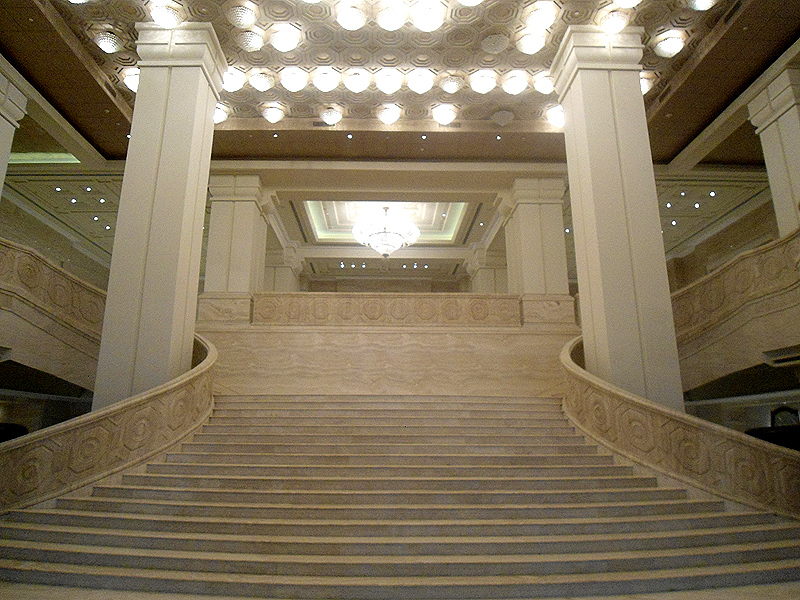
The Sangam staircase is as impressive an entrance as any in India
Built at a cost of Rs 1,200 crore, this 600-room hotel, spread over 1.5 million square feet in an eight acre plot, one of the largest to date in India, promises to change Chennai as a destination by significantly adding MICE (meetings, incentives, conferences, exhibitions) capacities to the city. It has 100,000 square feet of banqueting and convention space which includes 30,000 square feet of pillar-less ballroom, named after one of the greatest Chola rulers, Rajendra. It is another matter that this seemingly unending ballroom, in which one cannot see from end to end due to the slight curve of the building, can be divided into eight individual ballrooms and can accommodate 2,500 people.

Rajendra is the largest banquet hall in the city
This hotel is slated to alter the tourism and convention landscape in the region, ITC group chairman Yogesh Deveshwar had said at the launch of hotel complex in Guindy, which was inaugurated by the Tamil Nadu chief minister J. Jayalalithaa. MICE accounts for about 10-15 per cent of the city’s total hotel demand. Growing that the segment will be a challenge, admitted Deveshwar. 

Nakul Anand, Executive Director and head of the group’s hospitality division said, “The Grand Chola is ITC’s tribute to Tamil Nadu and an iconic asset for Chennai, as an archetype of the culture and ethos of the region. The grandeur and unique attributes of the hotel will provide a fillip to the hospitality sector in Chennai in addition to transforming Chennai into India’s convention capital.” Chennai, more a gateway to south India than a genuine tourism destination itself in the past, in recent years has seen the growth of industrial hubs in its periphery, with significant presence of sectors such as IT, auto, shipping, leather, woodwork, FMCG, etc. 

That it might. The hotel, the ninth in ITC’s Luxury Collection and part of global chain Starwood, reportedly even left the Chief Minister spellbound. After rumoured delays in allocating time for the inauguration, J Jayalalitha spent about the double the allocated time as she toured the expansive property, even though the state government reportedly denied permission for a planned helipad last year. The hotel, which has opened partially, is expected to finally employ over a thousand personnel, while about four times the number have worked for a number of years to realize this dream in concrete and imagination. With four separate entrances, and three wings, with the first housing Executive Club rooms, while the second wing has ITC One rooms, Towers rooms and all the suites and the third wing is for long stay residences.

The Lotus Lounge, an undemarcated area where one cannot hear outside noises, is a modern
application of Chola technology
Design antecedents
Those coming in from the main or West entrance for a meeting or convention could straightaway take a choice of extensive escalators from the pre lobby area, but would impressive the grand staircase in the main lobby, called Sangam, and reminiscent of magnificent palaces of yore. It used Traventine Romano Classico marble, interspersed with symmetrically arranged pillars finished in elegant white stucco, reminiscent of the temples of South India.

Rich detailing and numerous nods to the region's
history make this hotel a delight to explore
The architects, Singapore-based Smallwood Reynolds Steward & Steward LLC, have used Chola architecture as the inspiration for the façade and motifs in the hotel. Once inside, take note of Thanjavur’s Brihadishvara Temple inspired pillars and wall textures. In contrast to the rich mélange of the exterior façade, the walls in the interior are serene, almost sparse, and in neutral tones, lending an added feeling of serenity across this vast hotel. Visual leitmotifs include carved elephants raising their trunks in veneration, the Wheel of Life or Chakra, the four petalled clover floral motif and the intricate fretwork on panels and columns—each chosen for its relevance to Chola themes. And impressively, they have been hand carved by artisans from Mahabalipuram! Among the materials used are stone, granite, marble and wood. Note the impressive backlit onyx marble at the bell desks, though in other parts of the hotel the marble has  been sourced from distant parts of the world, including Italy, Spain, Morocco, Turkey India, China and Pakistan. 

Understated may the language of the hotel interiors, but look out for the individual works of art. A spectacular bronze and copper horse in the lobby is a reminder of Chola valour.  Large urns in deep brown and black grace the entrance to the lobby. These water urns were traditionally used to store water during summer months, and today are meant to symbolise the concept of responsible luxury. Pillar designs are sourced from Gangaikondacholapuram Temple. Door handles are exquisite metal peacocks in pairs. Even the exhaust in The Madras Pavilion is in the shape of a lotus! Water design elements are comparatively scarce, though there are three pools over the western entrance atop the banquets. Innovative features include a 'lotus lounge' an undemarcated area within which you can hear echoes but not a foot outside of it, a modem application of Chola technology.

Food destination
Cafe Mercara's warm interiors
When finished, the hotel will have 10 food and beverage outlets, offering a variety of cuisines, which includes the outlets the group is hoping will later expand to other hotel properties, including a fine dining Italian restaurant Ottimo, whose cooking range alone costs a crore, along with Madras Pavilion, a three meal buffet outlet and Café Mercara Express, a 24-hour signature coffee house. 

A much anticipated restaurant is Royal Vega, which will offer signature vegetarian dishes from across the country. Regular ITC hallmarks such as Peshawri and Pan Asian will also feature. Also on offer is the ambitious single malt and cigar lounge, Cheroot and Tranquebar, a bar for understated luxury, not forgetting 'I' Place - The Fun Pub! The gourmet shop, Nutmeg, with its extensive collection, sold out on the very first day itself.

The hotel will have 23,000 square feet of ITC’s signature Kaya Kalp spa and 21,000 square feet of luxury retail space. It became the world’s largest LEED (Leadership in Energy and Environmental Design) platinum rated hotel.

The digital valet has multiple uses
The hotel abounds in many firsts. It uses cutting edge technology in many aspects, including one-of-its-kind iPad controlled technology that will have all the controls in the room, from lights to AC and even looking at who is at the door without getting up. Of the 600 accommodations, 78 will be serviced apartments, which are yet to open. Just in case it is all too large to comprehend at one go, there is an interactive concierge display system in the lobby that can map out the direction to follow, and transfer the information to your phone!

ITC, which had started its hospitality journey in 1975 from the same city, already has 8,000 rooms in the country, and plans to add another 5,000 odd in the next five years with an investment of about Rs. 25,000 crore in the next five years. The Grand Chola is probably the glittering crown of this extensive empire.

Open to the directions
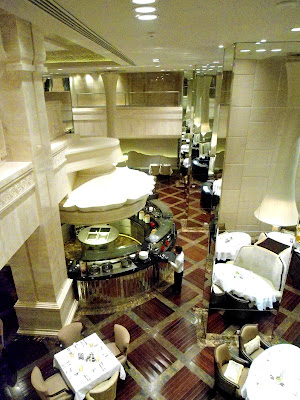
A view of Madras Pavilion
Vallavan is the north entrance, a drop off point for the Grand Raja Raja Chola Suite
or the Grand Presidential Suite guests and for ITC One. Guests get personalised check-ins here.

Sembiyan, the drop off facing the east, is the dedicated entrance for the high end luxury retail area – the Grand Luxe Street.

Killi, the drop off facing the south, functions as the entrance to the Chola Residences – the high end serviced apartments at ITC Grand Chola.

The grandest entrance, to the west, also serves as the main gate. This entrance is called the Chola drop off and leads to the Grand Stairway in the palatial lobby – Sangam.

The total quantity of marble used in the hotel is 92,000 square metres

The total quantity of external granite cladding is 12,000 square metres

The total external painted area is 15,000 square metres

An inhouse theatre, Kalai Theatre will be on 2,625 square feet with a seating capacity of 45 persons